

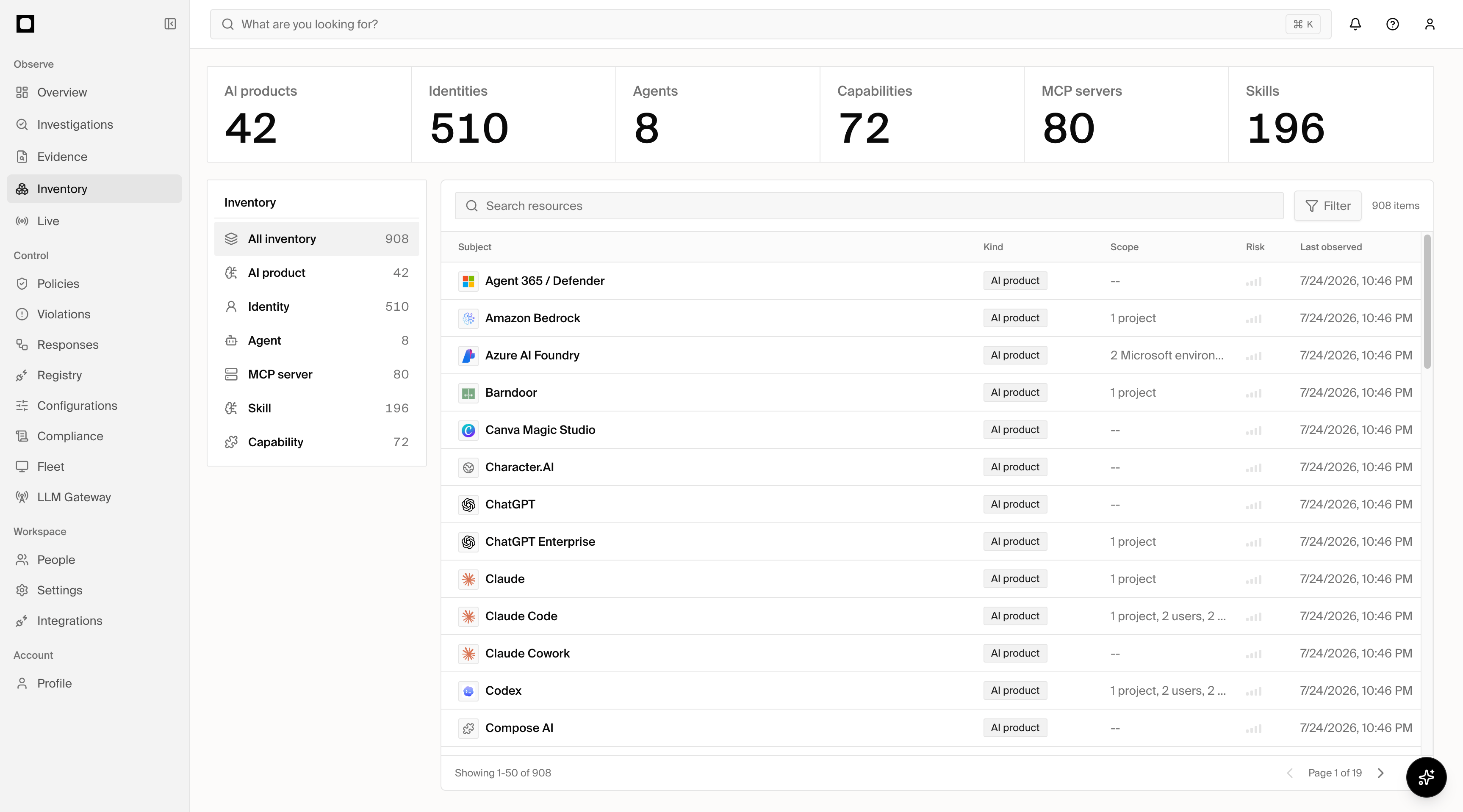
Inventory
What it includes
Inventory brings together:- AI products used across the organization, including SaaS applications, coding tools, model platforms, and other AI-enabled software.
- Agents and workloads running on endpoints, in cloud environments, and through connected applications.
- Identities using those products, agents, and workloads.
- MCP servers and skills available to users and agents.
- Capabilities exposed by connected agents and tools.
- AI-native artifacts such as plugins, memories, hooks, configuration files, and other runtime or development assets when supported by the source.
Connected sources
The combined view is more complete than any individual integration: cloud and
SaaS sources describe managed services, while endpoint, network, and repository
sources help reveal local, custom, and otherwise unmanaged AI.
Collection and refresh
Where supported, Forge starts an initial collection automatically after you configure a source or import its endpoints. Connected sources are then refreshed on a schedule so Inventory stays current without requiring manual scans. For large endpoint fleets, collection progresses across the full fleet over time rather than silently skipping devices. Each source shows when it last refreshed and whether the current collection is complete, still in progress, partial, or unsuccessful. Existing results remain available while Forge works through the remaining coverage. Fresh observations take precedence over older records without erasing their history. Forge reconciles identities and devices seen through sources such as Microsoft Entra ID, Intune, Jamf Pro, CrowdStrike, SentinelOne, network integrations, and Forge for devices into a current view, while preserving the sources behind each record.Explore your estate
The Inventory summary shows the number of AI products, identities, agents, capabilities, MCP servers, and skills Forge has discovered. Select a kind or search across all inventory to narrow the estate. Open an inventory record to review:- Where and when Forge observed it.
- The identities that use or interact with it.
- Related products, agents, workloads, and AI-native assets.
- Detected configurations and source-specific details.
- Risk factors associated with the record or its setup.